
Anodising

Aluminium anodising
Aluminum alloys are anodised to increase corrosion resistance, improve lubrication or adhesion, and provide decorative finishes (colour dyeing). Anodising is an electrochemical process that creates an aluminium oxide Al2O3 film on the surface that is uniform, denser and much harder than natural oxidation. Aluminium converts rather than deposits so 50% of the anodic film ingresses below the original surface and 50% above. The resulting anodised film is electrically non-conductive and resistant to wear, widely used in aerospace, automotive, defence and medical applications.
See our comprehensive guide to Aluminium anodising.
Chromic Anodising (Type 1)
To control precision tolerances, a thin 0.5 – 3µm film is generated with chromic acid anodising and applied in the aerospace industry for corrosion protection and on flight-critical aluminium components that get subjected to high stresses such as landing gear. Type 1 Chromic Acid Anodising works best on aluminium with few alloying elements and accepts primers well. Unsealed chromic anodising has a light grey silk texture used as a key for primers, paints and adhesives.
Tank size: 2500x860mm
Treatment specifications (9)
- Def Stan 03-24/3 (was Def 151/2)
- Def Stan 21-5/2-2
- MIL-A-8625 Type 1
- MIL-STD-171 7.1.1
- TS 112 D1
- JP 213 Method 2
- ASTM B580 Type G
- AIM Altitude Spec 2-02
- BS 1615
Benefits of chromic anodising:
- Corrosion resistance to atmospheric and saltwater environments.
- Electrical insulation, the aluminium oxide film is non-conductive.
- Paint adhesion, the oxide film is chemically active for painting.
- Adhesive bonding, improves adhesion and bond strength.
Restrictions of chromic anodising:
- Chromic anodising is not suitable for aluminium alloys containing a maximum of 7% copper, nickel and iron or more than 6% copper.
- Chromic acid anodising is also not suitable for colour dyeing due to the thin coating layer as most colours will appear blotchy, but it can be painted or coated.
- Chromic acid anodising uses hexavalent chromium compounds which are genotoxic carcinogens, so regulations restricting its use (i.e. not RoHS compliant) advances the consideration to use Sulphuric Anodising instead. See next...
PDF – Anodising Treatments List
Sulphuric Anodising (Type 2)
The sulphuric acid anodise process films range from 1.8 – 25µm with the thicker coating giving a greater corrosion resistance. The 'silver' finish can be colour dyed providing a recommended surface coating of 10-15µm is applied. The porous nature of sulphuric acid films prior to sealing is used to particular advantage in the production of coloured surface finishes on aluminium and its alloys. The porous aluminium oxide absorbs dyes well, and subsequent sealing helps to prevent colour loss. Although reasonably colour fast they may bleach under prolonged direct sunlight. The sulphuric acid process is the most common method for anodising colours such as red, blue, green, purple, orange, copper, gold, grey, black and clear.
Tank size: 2800x860mm
Treatment specifications (13)
- ISO 7599 (replaces BS 1615 and BS EN 12373-1)
- AMS 03_25 / Def Stan 03-25 (replaces Def 151 Type 1, NWS 1005/2-1 and NES 1005/2-1)
- MIL-A-8625 Type 2 (MIL-A-8625 Type II)
- MIL-STD-171 7.2.1 and 7.2.2
- Def Stan 21-5 2-1
- JP 213 Method 1
- JP 217
- TS112 F3 + D2
- DS26.00 F3 + D2
- P&G STD 41-013
- ASTM B580 Types B, C, D, E and F
- AMS 2471
- AIM Altitude Spec 2-01 & 2-09
Benefits of sulphuric anodising:
- Less expensive because of the chemicals used, heating and power consumption and the shorter length of time required to achieve thickness.
- More alloys can be finished.
- Harder than chromic anodising.
- Waste treatment is easier than chromic anodising which reduces cost.
- RoHs and REACH compliant.
Hard Anodising (Type 3)
The strongest possible finish. Similar to sulphuric anodising, hard anodising is to do with producing a thicker oxide layer (20 – 70µm, up to 100µm possible on some aluminium alloys) and so increasing the corrosion and wear resistance, compared to standard sulphuric anodising. The higher the thickness, the higher corrosion resistance for aggressive environments. Hard anodising can be coloured by dyeing but will be more dull and greyish in finish because of the thickness.
Tank size: 1600 x 860mm
Treatment specifications (6)
- ISO 10074 (replaces Def Stan 03-26, NES1005/2-3, Def 151 Type 3 and BS 5599)
- MIL-A-8625 Type III
- Def Stan 21-5 2-3
- JP250
- ASTM B580 Type A
- AIM Altitude Spec 2-03/ 2-11/ 2-12 (PRIME)
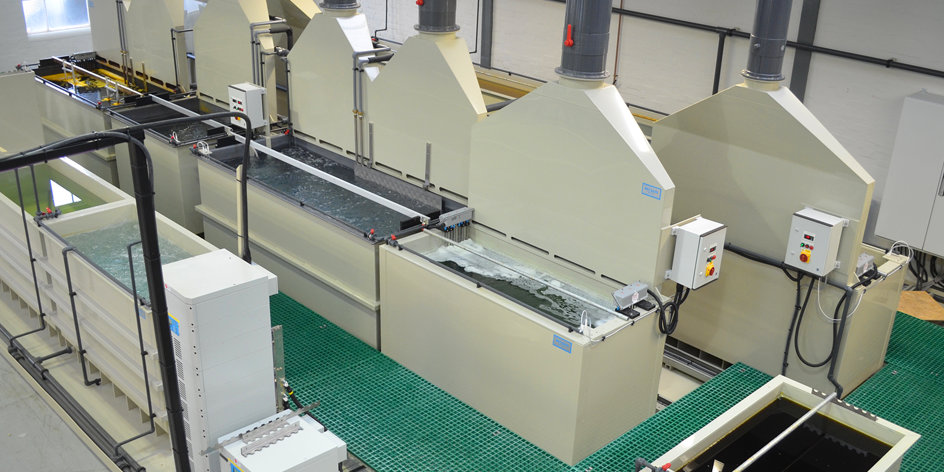
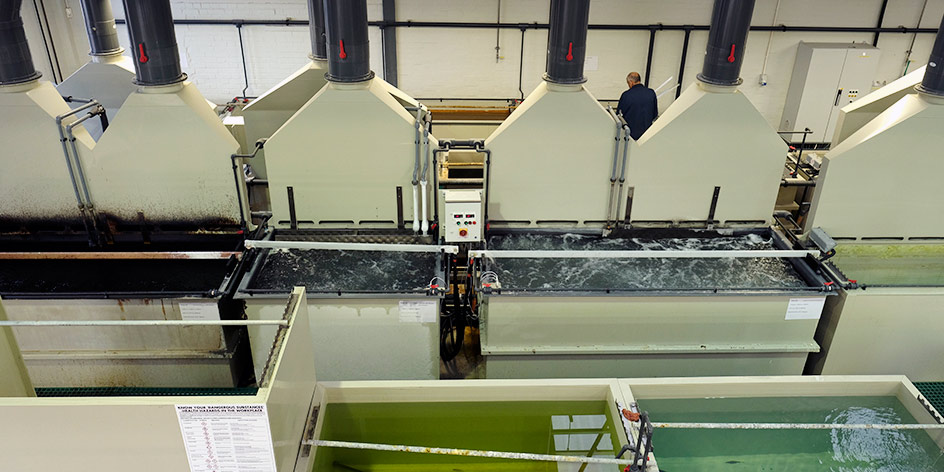
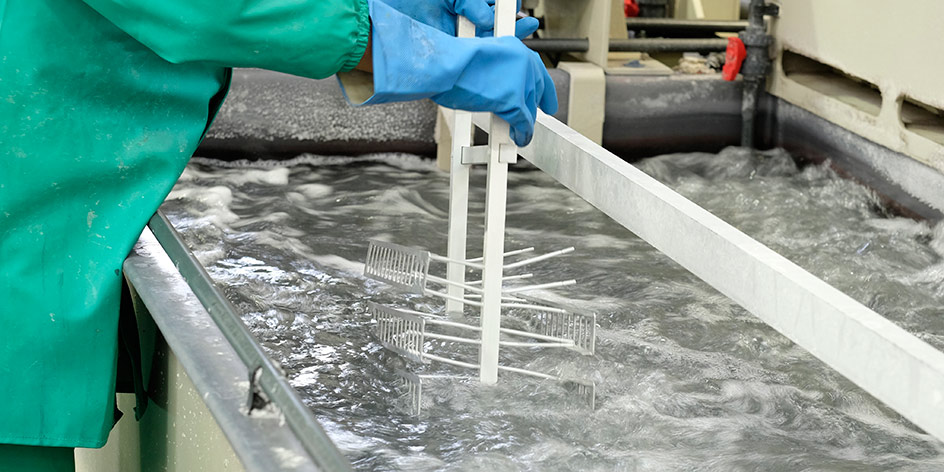
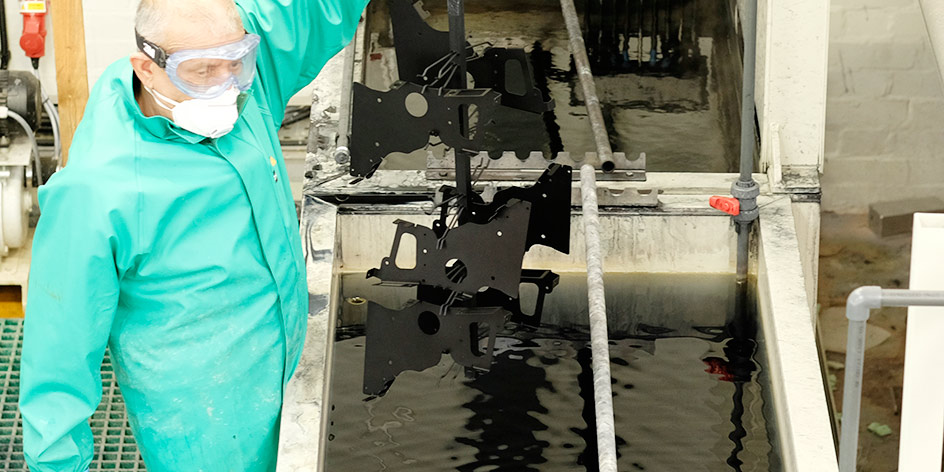
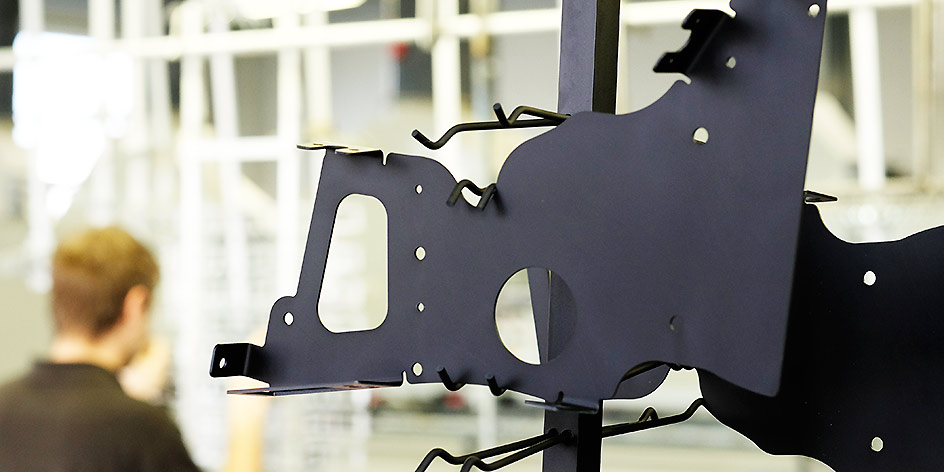
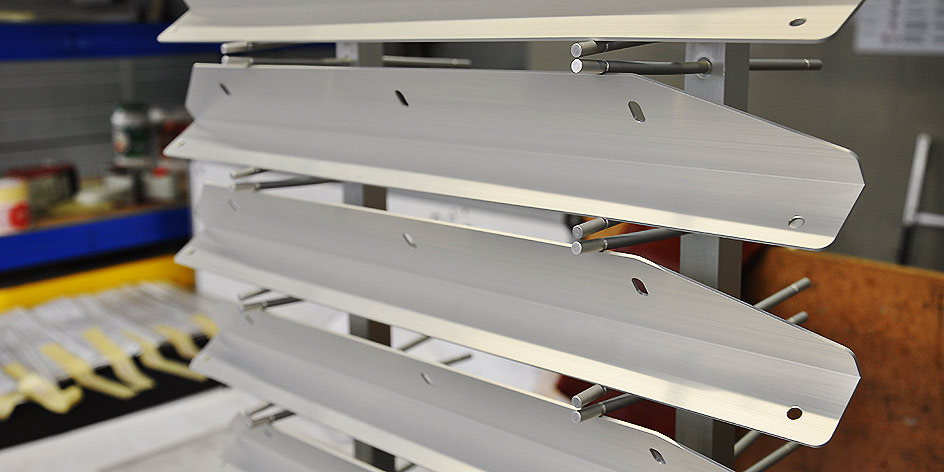
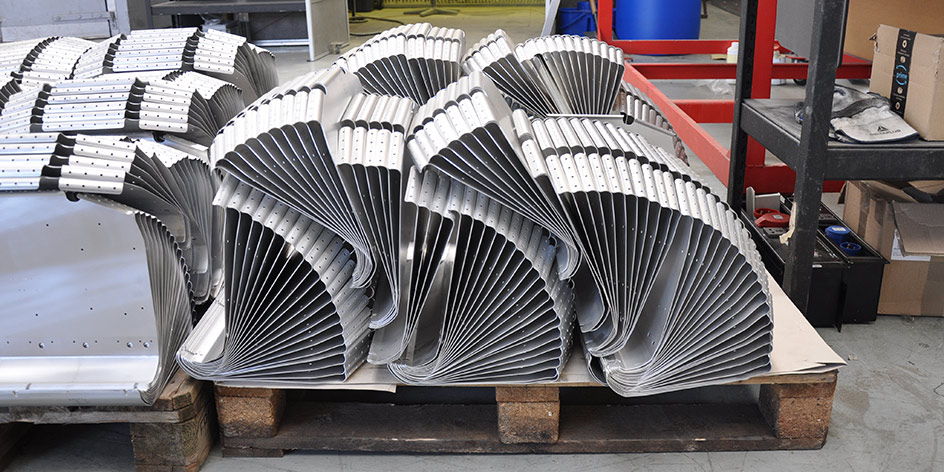
Anodising in the works
Enquiry ready?
Send the drawings, files or a description of the job and say how many you need.